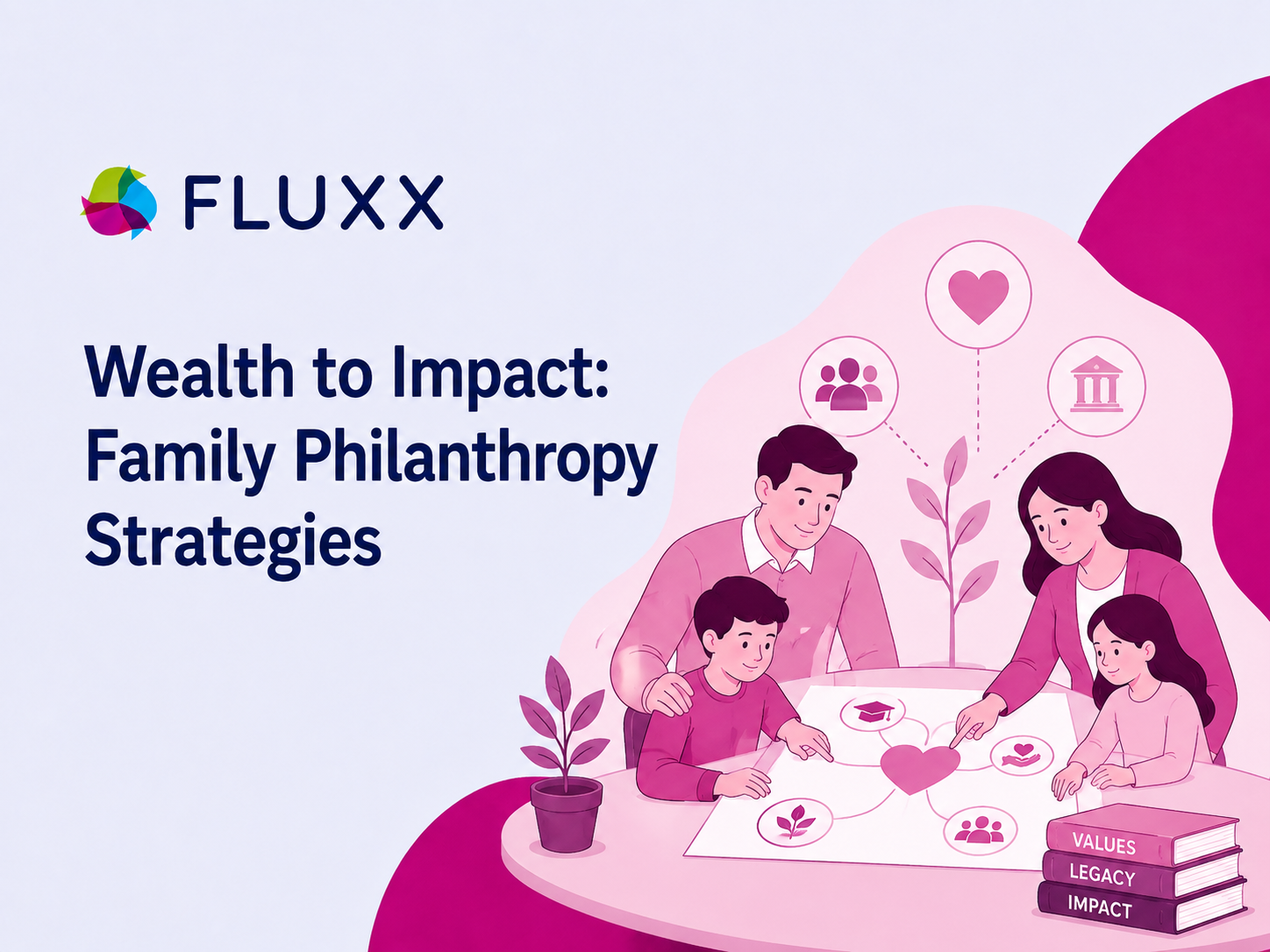
Through family philanthropy, families have a structured framework to convert their wealth into social impact. Instead of making occasional random gifts, families can develop shared priorities and granting procedures, involve several generations in grantmaking, and engage organizations aligned with their values.
Eventually, most families establish foundations for their charitable activities. This helps ensure a consistent process for how donation decisions are made, grants are managed, results are measured, and impact is evaluated.
As family wealth philanthropy advances, it becomes more complex. Applications, approvals, payment and reporting processes, board decisions, relationships with grantees, and a history of giving all need management. A good strategy and grant management solution can preserve the personal aspects while making it easier to handle.
Family Philanthropy Explained
Family philanthropy refers to charitable giving driven by a family's collective resources, values, priorities, and legacy. It can be informal and random or very structured, involving staff, boards, investments, and systems.
The key feature is that families actively determine how resources are allocated and what outcomes they want through donations. Some focus on issues like education, health care, climate change, or community development. Others fund multiple organizations linked by geography, family history, or broader social goals.
The structure may change over time. The family founder makes major decisions while younger generations join governance and grantmaking later. Processes should preserve the family's institutional knowledge and philanthropic priorities.
Benefits of Establishing a Family Foundation
A family foundation helps philanthropy become more structured and consistent. Instead of making independent decisions yearly, the family can create a mission and priorities, design governance, and allocate resources through a dedicated organization.
There are several benefits of having a family foundation:
- More focused strategy: Families can allocate their resources to specific causes rather than making random gifts.
- Consistency: A foundation can ensure the continuity of philanthropic activities and the participation of future generations in it.
- Consistent granting: Applications, approvals, payments, reporting, and grant renewals can be handled using established processes.
- Clear governance: There will be clear rules regarding who should approve the grants and why.
- Visibility of the impact: A foundation will have access to information about grant recipients, the issues they face, and how well funding aligns with the family's intentions.
These benefits make the foundation a far more effective tool for preserving a family's philanthropic legacy than random gifts.
Relationship Between Family Foundations and Grants
Grants are typically the main tools for implementing the philanthropic strategy of family foundations. The foundation identifies organizations aligned with its mission, evaluates funding opportunities, approves grants, disburses funds, and tracks fund usage.
This process can become complicated quickly. Even a small family foundation manages dozens or hundreds of active grants across programs, geographies, and funding cycles. Each grant involves application info, due diligence, board approvals, payment plans, reporting, communications, and renewal decisions.
The process of grantmaking also provides useful historical data. Over time, the foundation gathers information about its funded organizations, the amounts invested in specific problems, its long-term relationships, and changes in philanthropic priorities. This information will help in making better decisions in the future.
Other Giving Vehicles of Family Philanthropy
Establishing a family foundation is not the only way for a family to carry out charitable activities. Depending on involvement, administrative capabilities, and goals, families have other options.
Common vehicles of charitable donations include:
- Donor-advised funds: Families contribute assets to a certain organization and recommend giving grants.
- Direct charitable gifts: Families give their money directly to nonprofits without establishing any philanthropic organization.
- Charitable trusts: This legal structure can be used not only to support charitable projects but also for estate and financial planning purposes.
- Community foundations: Families can establish funds within community foundations to support organizations in specific regions.
- Corporate foundations: Families who operate businesses can coordinate their charitable activities via corporate foundations.
Depending on the type of giving, families may use several vehicles simultaneously. The main point is whether the structure provides enough control, participation, and management for the family.
Common Strategies Implemented by Family Foundations
Family foundations are more efficient when they shift from reviewing individual applications to developing a grantmaking strategy.
Mission-focused grantmaking is one of the most popular strategies, in which the family directs its funds toward a particular set of issue areas. Multi-year grants, which provide organizations with more stable funding and reduce paperwork, are another common strategy.
Some foundations use place-based grantmaking and allocate grants to a specific city, state, or community associated with the family. There are also portfolio strategies which involve combining large grants, small pilot grants, capacity-building grants, or collaborative funding with other foundations.
In recent years, more foundations rely on historical grant data when designing strategies. Knowing which organizations they supported, how much money was invested in certain problems, and how grants are distributed among programs helps the board make informed decisions.
Benefits for Families and Grantees
Effective family philanthropy benefits both sides of the funding relationship.
For families, the structured process provides more control, confidence in decision-making, better continuity for future generations, and greater visibility of impact. Board members will know how grants relate to the foundation's mission and how current decisions align with giving history.
For grantees, this process provides more predictability and transparency. Clear rules, prompt communication, organized reports, and consistent processes reduce uncertainty and save time for nonprofit staff.
This provides a better grantmaking experience. Families retain control and visibility, while grantees get clear expectations and a more professional funding relationship.
How Fluxx Helps to Make Philanthropy Easy
As family foundations grow, grantmaking becomes too difficult to manage with spreadsheets, email inboxes, shared folders, and institutional knowledge. Fluxx provides a centralized environment to manage these processes.
Family foundations can use Fluxx to:
- Centralize grant information: Connect applications, approvals, payments, reports, documents, and historical information with every grant.
- Provide the ability to configure workflows: Adjust review, approval, and reporting processes to fit unique organizational requirements.
- Increase visibility for the board: Make it easier to analyze funding activity, historical giving, and portfolio-level information.
- Improve relations with grantees: Maintain a record of communications, requirements, and previous donations.
- Preserve institutional knowledge: Keep grant history available despite changes in staff, board, or family members.
- Decrease administrative effort: Replace manual tracking with consistent processes and easy access to information.
Grant management software is not a substitute for philanthropic strategy. It helps families execute it.
Wealth Turned into Lasting Impact through Philanthropy
Family philanthropy is effective when supported by the right strategy, good governance, and consistent processes. Family foundations provide greater focus and continuity, while grants convert strategy into donations.
The more organized philanthropy becomes, the more important information management is. Other giving vehicles may be used, but the idea remains: families need visibility into how resources are allocated and how decisions align with their goals.
Using the proper strategy and systems, family philanthropy can become more manageable, consistent, and impact-oriented.
Book a demo with Fluxx to see how grant management software can help your family foundation organize grants, improve visibility, and execute its philanthropic strategy.