Nonprofits often begin by managing grants using disconnected tools like spreadsheets, shared folders, and calendar reminders.
This works well for smaller grant portfolios. However, with time the process becomes more complicated since there are more opportunities, more deadlines, more grantors, more requirements and more people who are involved in the process.
Ultimately, the challenge isn't just tracking grants, but maintaining visibility into the entire funding process.
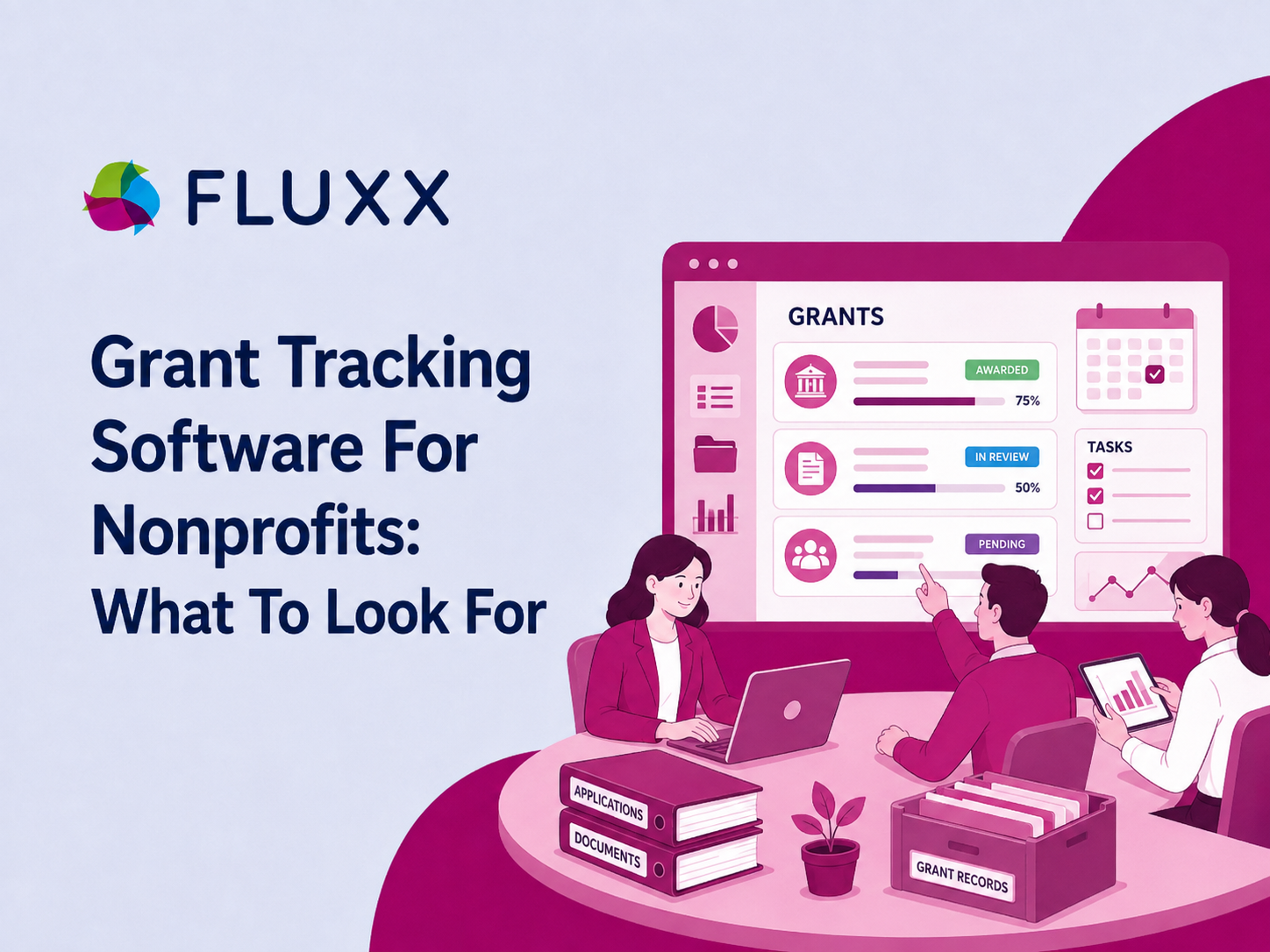
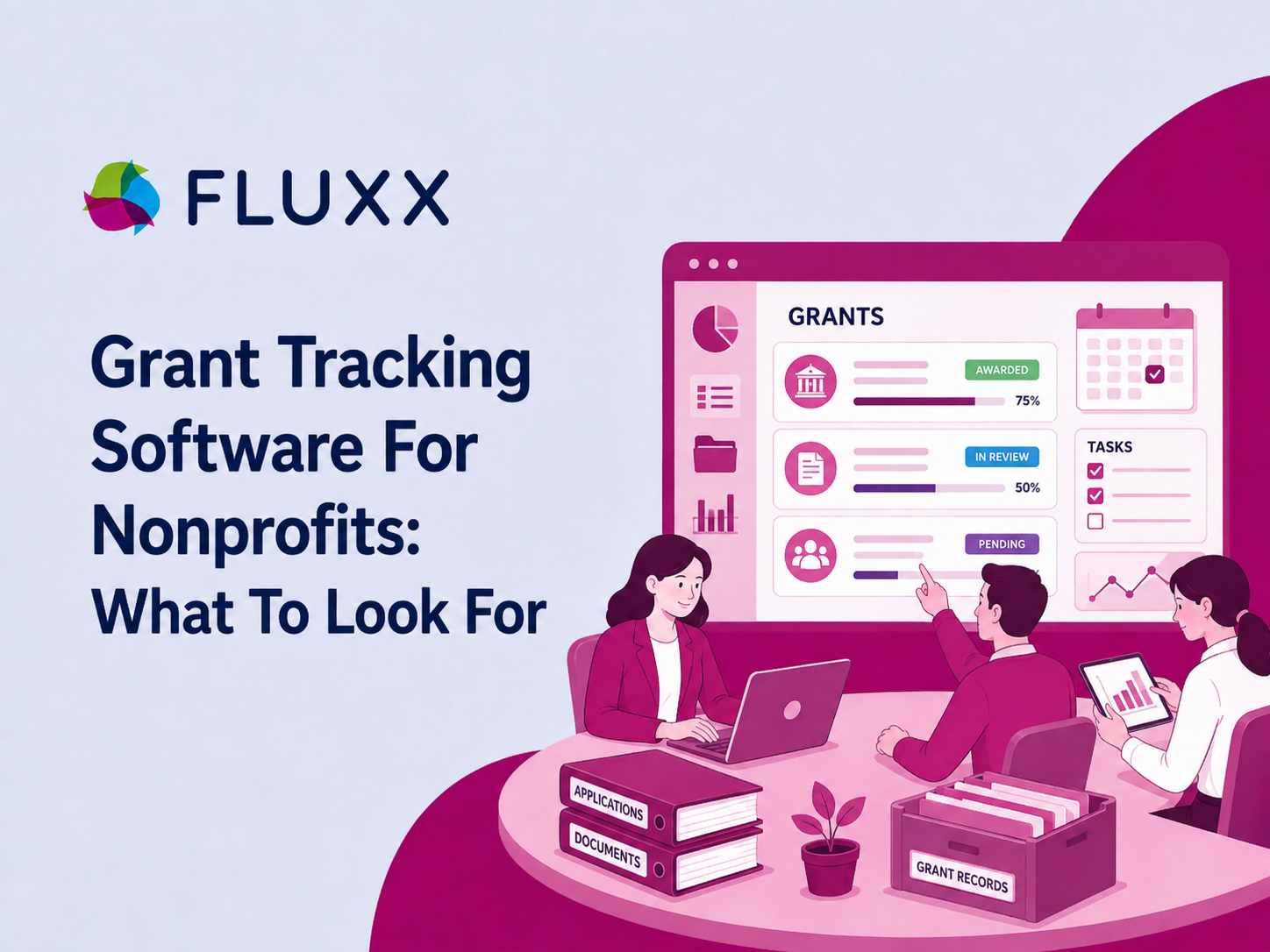
Grant tracking software for nonprofits is aimed at solving this problem through consolidating data, implementing more efficient workflows and reducing the amount of work that has to be done manually to track grants.
Overview of Grant Tracking Software
Grant tracking software provides nonprofits with an organized and efficient way of managing grant applications and awards. With grant tracking software nonprofits do not have to look for the grant-related data in spreadsheets, emails, shared drives or scattered personal calendars.
For instance, a nonprofit can use grant tracking software to record grantor data, to monitor deadlines, to assign tasks and responsibilities, to store documents and report requirements and to track the history of all relations with each grantor. Thus, if there are 30 active grants and 20 possible new opportunities in the portfolio of a nonprofit, its development team can use grant tracking software for finding out what applications are submitted, what reports have to be submitted, who is responsible for each task and which grantors are ready for renewal of the grant agreement.
Why Do Nonprofits Need Grant Tracking Software?
Tracking of the grants becomes more difficult with time because the amount of funding increases and with this there are more opportunities that a nonprofit has to track. Development teams find out and manage the opportunities, however, they always rely on the information provided by other departments of a nonprofit, such as program and finance departments. Leaders of the organization may be involved in approving applications and reviewing the overall picture of grants in the portfolio.
When this information varies across departments without grant tracking software, the following issues often arise:
- Missed application and reporting deadlines
- Duplicated data entries
- Inconsistent grant records
- Lack of clear responsibility
- Difficulty in document location
- Limited visibility into the funding pipeline
- More time spent on reporting
With grant tracking software nonprofits can implement a more efficient process of tracking grants so they do not have to create the process each time they want to apply for a grant. Additionally, grant tracking software provides a centralized information hub, reducing the need for constant check-ins and simplifying issue identification.
Which Key Features Are Important In Evaluating Grant Tracking Software?
Not every grant tracking platform will suit every nonprofit. Therefore, to evaluate the software it is better to start with how the organization works and what problems the software should help to solve. Choosing the product with the longest list of features will not help here. It is better to pay attention to the capabilities that can make the process more efficient and allow different departments of the organization to work with the same information.
Centralized grant records
It should create a single place for all information related to each opportunity and award. All data concerning funder, application history, documents, requirements, communications and reporting activity should be easily accessible and not scattered between multiple systems and folders.
Deadline and requirement tracking
The platform should help to monitor deadlines of application dates, interim reports, final reports, renewals and other deliverables without relying on personal calendars of people.
Task ownership
Effective grant tracking software tracks tasks and assigns responsibilities, enabling seamless interdepartmental collaboration without confusion.
Reporting and dashboards
The platform should give a good visibility into pipeline activities, upcoming deadlines, awarded funding and reporting obligations and other important aspects of grants without wasting hours on report creation.
Document management
Applications, award letters, budgets, reports, agreements and other documentation should be attached to the corresponding opportunity or award.
Workflow flexibility
Each nonprofit has its own process of application approvals and reporting and the software should fit this without imposing a too rigid model on the organization.
Integration capabilities
Grant information should be integrated with financial, reporting and other systems in order to avoid duplicated data entries, inconsistency and creation of an additional disconnected pool of information.
How Does Grant Tracking Software Increase Efficiency?
When the software is compared to spreadsheets, it becomes clear why the process becomes more efficient. Spreadsheets can record deadlines, but someone has to remember to update them. It can list owners of each task, but it cannot ensure that these people will be aware of deadlines and requirements. Spreadsheets can store links to the required documentation, but people have to spend time looking for the correct file in the folder.
Spreadsheets become more complex with time. They get new tabs for different programs, columns increase, color codes become more important and employees create new versions of spreadsheets. In the end, only one or two employees understand the structure of the spreadsheet and can use it, but this creates additional risks if these people are unavailable or leave the organization.
Instead of doing all this manually, grant tracking software introduces a structured workflow. There is no need to check several spreadsheets to find out what happens with grants, there is no need to remind employees about deadlines and requirements, there is no need to prepare a report from several spreadsheets. All this information can be found and accessed in one place.
This means less time for managing the process and more time for applying for funding and developing programs.
Places Where Grant Tracking Software Helps You Save Money
There are many financial benefits of grant tracking software besides reduced staff time. Manual grant management can lead to many additional costs including loss of funding opportunities, incomplete reporting, duplicated work, hiring consultants and time spent on reconstruction of lost information.
Missed deadlines can cost an organization a valuable opportunity. Incomplete or late reporting puts the renewals at risk. Missing documentation forces people to spend hours trying to find correct files and to reconcile information scattered between multiple systems. Sometimes, organizations have to pay consultants just to reconstruct the process.
Grant tracking software can help to reduce these costs by reducing the process of data management and retrieval and by increasing capacity of the organization without immediate increase of its headcount. If the current team can manage more opportunities and awards without increasing administrative load, the organization can increase its grants portfolio without increasing operational costs.
This is very important for growing nonprofits since it can determine if the organization will scale its funding program efficiently or not.
How Does Grant Tracking Software Fix Reporting Leaks?
There can be many sources of the information related to reporting and many different processes to collect all this information. Program departments have their outcome data, finance has data on budgeting and spending, development has grant information in spreadsheets. When a report is due, it is collected manually.
However, this process creates additional gaps where the information can be missing, incorrect or outdated. This also makes the process reactive, since teams usually start collecting data when the deadline is approaching.
Grant tracking software helps to fix reporting leaks by centralizing all the data required for the reports and by introducing defined responsibilities. This software allows nonprofits to:
- Keep track of upcoming reporting requirements
- Have current grant records
- Keep documents connected to the right grant
- Keep track of milestones and deadlines
- Coordinate between departments
- Store historical data on reporting
This makes reporting proactive by ensuring all necessary data is accessible throughout the grant lifecycle.
Is Grant Tracking Software Different From Grant Management Software?
While grant tracking and grant management software overlap, they often serve different functional needs. Grant tracking software primarily provides visibility into opportunities, deadlines, awards, requirements, and reporting.
Grant management software includes broader set of processes and workflow support and can also help nonprofits in:
- Opportunity tracking
- Application development
- Approvals
- Award management
- Reporting
- Compliance
- Historical records
- Collaboration between departments
While basic tracking tools suffice for small portfolios, growing nonprofits need comprehensive management solutions that go beyond simple status monitoring. Ultimately, the right system should support your entire workflow.
Why Fluxx Checks All the Boxes
Fluxx Grantseeker is the ideal solution for connecting grant tracking and management. It replaces disparate spreadsheets, inboxes, and calendars with a single, unified environment for managing all your grant information.
Fluxx Grantseeker can help nonprofits to:
- Centralize grant information
- Improve deadline visibility
- Create accountability
- Strengthen reporting
- Reduce manual work
- Support growth
The result is not just better organization. As your nonprofit grows, grant management becomes more manageable, reducing departmental gaps and reliance on manual coordination.
Choosing the Right Grant Tracking Software for Your Nonprofit
The best grant tracking software for nonprofits should help your team spend less time managing information and more time utilizing it. It means that all manual processes should be replaced, the visibility into the pipeline of grants should be improved, the reporting process should become more efficient and each department should know what it has to do.
While useful initially, spreadsheets become difficult to maintain as grant portfolios grow in complexity. The same holds true for disconnected folders, calendars, and single-purpose tools.
The right software will give your nonprofit the foundation for growing grant activities without growing administrative complexity. It will allow transforming grant tracking from manual tasks into a more connected process.
Book a demo of Fluxx Grantseeker to see how it can transform your nonprofit's grant tracking and management.