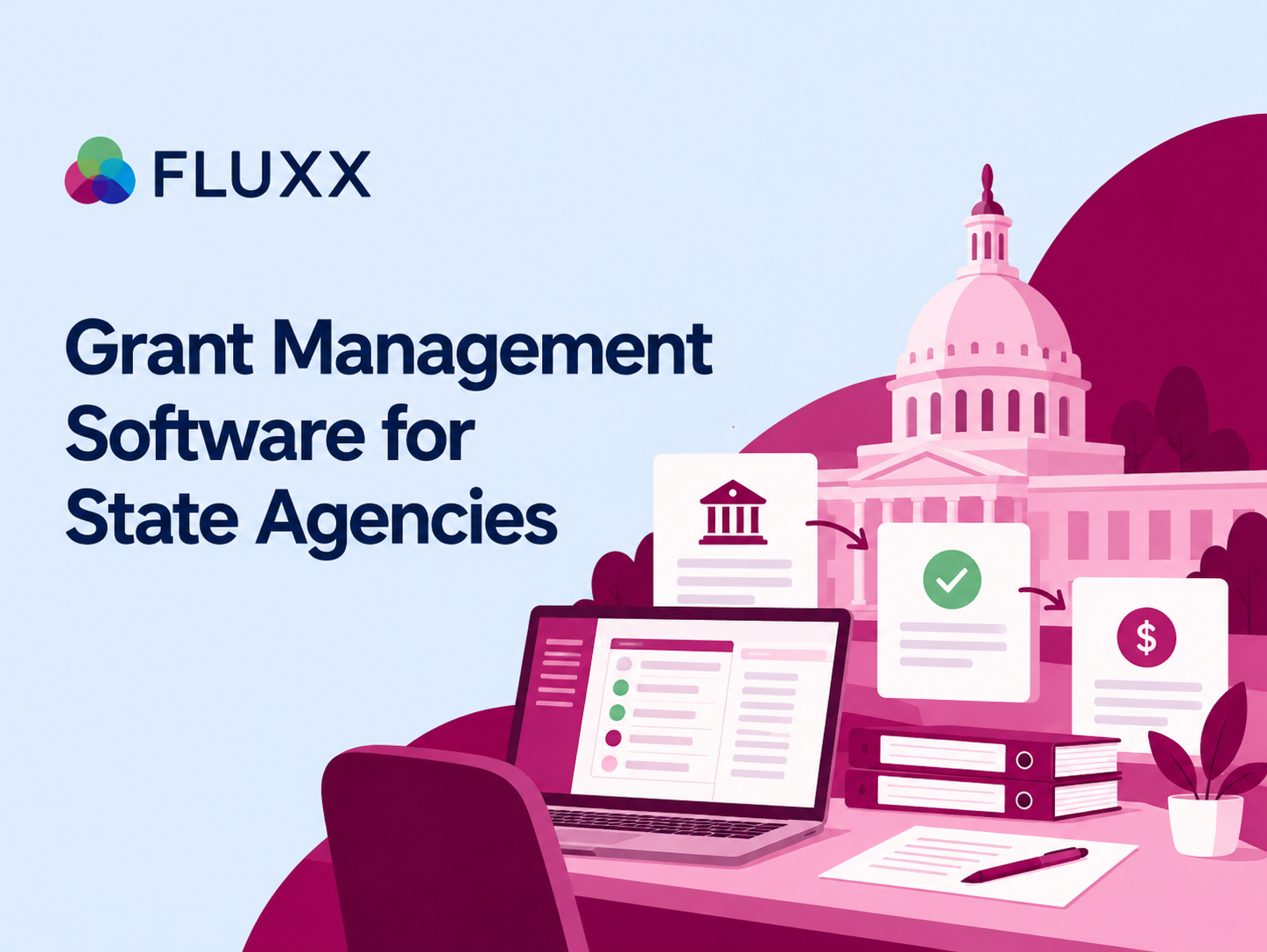
Grant Management Software for State Agencies
State agencies manage some of the most complex grant programs in the public sector.
A single agency may receive federal funding, administer state-funded programs, issue awards to local governments and nonprofits, monitor subrecipients, track performance, prepare reports, and maintain documentation for audits. Each program can have different rules, timelines, stakeholders, and reporting requirements.
That complexity makes spreadsheets, shared drives, email threads, and disconnected systems difficult to maintain at scale.
Grant management software for state governments gives agencies a more structured way to manage funding from initial program setup through application, award, monitoring, reporting, and closeout. Instead of treating each grant program as a separate administrative process, agencies can create consistent workflows while still accommodating the requirements of individual programs.
For state governments, the true value lies far beyond mere administrative organization. A strong grant management platform can improve oversight, make reporting easier, strengthen subrecipient management, reduce administrative work, and help agencies maintain a clearer record of how public funds are being used.
Why State Government Grant Management Is So Complex
State government grants involve a substantially wider network of stakeholders and cross-functional partners than initiatives managed by smaller organizations.
An agency may need to coordinate program staff, finance teams, procurement personnel, legal departments, leadership, auditors, federal agencies, local governments, nonprofits, contractors, and other recipients.
There may also be several layers of funding.
For example, a state agency may receive funding from a federal program and then distribute that funding to cities, counties, public institutions, or nonprofit organizations. In that situation, the agency is responsible not only for managing its own award but also for maintaining oversight of the organizations receiving funds.
The work can include:
- Creating funding programs
- Publishing opportunities
- Receiving applications
- Evaluating eligibility
- Coordinating reviewers
- Approving awards
- Executing agreements
- Tracking payments
- Monitoring subrecipients
- Collecting performance information
- Managing amendments
- Preparing reports
- Maintaining audit documentation
- Closing awards
Without a connected system, information from those activities can easily become fragmented.
Where Traditional Grant Tracking Starts To Break Down
Many state agencies already have systems for accounting, procurement, document storage, or financial reporting. The challenge is that those systems do not always manage the full grant lifecycle.
As grant volume increases, teams often create spreadsheets to fill the gaps.
One spreadsheet tracks applications. Another tracks awards. A separate file contains reporting deadlines. Program staff maintain their own documents, finance has payment information, and leadership may receive manually prepared summaries.
That approach can work temporarily, but it creates several problems.
Different teams may work from different versions of the same information. Staff members spend time searching for documents or asking other departments for updates. Deadlines can be difficult to monitor across dozens or hundreds of awards. Reporting requires combining data from multiple places.
The problem becomes even more significant when staff members leave because important program knowledge may exist in personal folders, email histories, or spreadsheets that only one person understands.
Grant management software gives agencies a way to reduce those gaps by organizing the operational grant record in one place.
What Grant Management Software For State Government Should Handle
State agencies need more than a basic application portal.
A useful platform should support the full lifecycle of state government grants and provide enough flexibility to accommodate different programs.
Program and Opportunity Management
Agencies should be able to configure different funding programs, application processes, eligibility requirements, timelines, and review criteria.
One department may administer infrastructure grants while another manages workforce development or public health programs. The system should support those differences without forcing every program into the same rigid workflow.
Application and Review
Grant management software should help agencies receive applications, organize supporting documentation, assign reviewers, record evaluations, and maintain a clear history of funding decisions.
This creates more consistency and reduces the administrative work associated with manually distributing applications and collecting scores.
Award Administration
Once an award is approved, agencies need to manage agreements, payments, reporting schedules, amendments, requirements, and communications.
Connecting pre-award and post-award information is important because staff should not have to rebuild a grant record after a funding decision is made.
Subrecipient Management
Subrecipient oversight is a major responsibility for many state agencies.
Teams need to maintain organizational records, risk information, reporting history, performance data, supporting documents, and follow-up activity for each recipient.
A central platform can make that information easier to access across programs.
Reporting and Oversight
State agencies need visibility at both the individual award level and the overall portfolio level.
Program managers may want to know which recipients have overdue reports. Finance teams may need payment information. Leadership may want to understand how much funding has been awarded by program, geography, recipient type, or status.
The system should make those questions easier to answer without requiring a new spreadsheet every time.
Managing State Government Grants Across Multiple Programs
One of the biggest challenges for state agencies is scale.
A single department may manage several grant programs with different funding sources, requirements, and reporting schedules. Some may be federally funded, some may use state appropriations, and others may combine multiple funding streams.
That means standardization has to be balanced with flexibility.
Agencies benefit from having common processes for areas such as documentation, approvals, reporting, and recordkeeping. At the same time, each program may require different application questions, review criteria, milestones, payment structures, or compliance requirements.
Grant management software should allow agencies to create consistent operating standards without eliminating program-specific workflows.
This is particularly valuable when new programs are launched quickly. Instead of building a new manual process from scratch, teams can adapt an existing structure and configure it around the new funding opportunity.
Why Subrecipient Oversight Matters
For many state agencies, grant administration does not end when money is awarded.
The agency may remain responsible for monitoring whether recipients use funds appropriately, submit required reports, complete program activities, and comply with award conditions.
That makes subrecipient oversight a major part of state grant management.
Agencies may need to track:
- Organizational information
- Risk assessments
- Award conditions
- Payment history
- Reporting requirements
- Performance milestones
- Monitoring activities
- Corrective actions
- Communications
- Amendments
- Closeout documentation
If those records are spread across departments, it becomes difficult to build a complete picture of a recipient.
Centralizing that history can help program staff identify issues earlier and give leadership better visibility into portfolio performance.
Grant Compliance And Audit Readiness
Compliance is another reason state agencies need structured grant management processes.
Different awards may have different financial, programmatic, procurement, documentation, and reporting requirements. Agencies also need to maintain enough historical information to explain how decisions were made and how funds were managed.
Audit preparation becomes much easier when documentation is organized continuously.
Instead of searching through old emails and shared folders, staff should be able to locate award documents, approval records, reporting history, amendments, monitoring information, and related communications from the grant record.
A grant management platform does not replace accounting systems, auditors, legal teams, or compliance professionals. It supports those functions by maintaining a more complete operational history of the grant.
How Better Grant Data Improves State Reporting
State agencies are frequently asked to answer questions about their funding.
How much money has been awarded? Which communities received funding? Which recipients have outstanding reports? Which programs are under or over budget? How many grants are active? What results are being reported?
Those questions become difficult when data is stored differently across programs.
Grant management software can improve reporting by creating more consistent data structures and centralizing information that would otherwise live in separate spreadsheets.
That allows teams to move beyond basic status tracking.
Program staff can monitor individual awards. Managers can evaluate program performance. Leadership can review funding activity across multiple portfolios. Agencies can also respond more efficiently when external stakeholders request information.
Better reporting depends on better data, and better data depends on consistent processes for collecting and maintaining it.
What State Agencies Should Look For In Grant Management Software
State governments should evaluate software based on the complexity of their programs rather than simply looking for an online application form.
Important capabilities include:
- Configurable workflows: Agencies should be able to adapt processes for different programs, departments, and approval structures.
- Centralized grant records: Applications, awards, documents, reports, payments, and historical activity should remain connected.
- Subrecipient tracking: Teams should be able to maintain recipient records, requirements, monitoring history, and performance information.
- Reporting and dashboards: Program teams and leadership should be able to view grant activity without rebuilding reports manually.
- Role-based access: Different users should have appropriate levels of visibility and responsibility.
- Deadline and requirement tracking: Staff should be able to monitor reporting dates, milestones, renewals, and other obligations.
- Document management: Supporting records should remain connected to the appropriate award or recipient.
- Audit history: Agencies should be able to preserve a clear record of actions, approvals, and changes.
The right system should reduce administrative complexity rather than adding another disconnected tool.
How Fluxx Supports State Agencies
Fluxx helps state agencies manage complex grant programs through AI grant management software.
Instead of building separate manual processes for every program, agencies can configure workflows around their own funding structures and administrative requirements.
Fluxx can help state government teams:
- Centralize grant information: Maintain applications, awards, recipients, documents, reports, requirements, and historical activity together.
- Configure different programs: Support unique application, review, approval, monitoring, and reporting workflows.
- Improve subrecipient oversight: Keep recipient information, reporting history, monitoring activity, and requirements more accessible.
- Track deadlines and obligations: Maintain better visibility into reports, payments, milestones, and closeout requirements.
- Support audit readiness: Preserve documentation and decision history throughout the lifecycle of each award.
- Improve portfolio reporting: Give program managers and leadership clearer visibility into grant activity across programs.
- Reduce manual work: Replace repetitive spreadsheet updates, document searches, and status requests with more structured processes.
- Preserve institutional knowledge: Maintain program and award history even when staff roles change.
For agencies managing multiple programs and funding sources, this creates a more consistent operational foundation.
Build A State Grant Management Process
State government grants are difficult to manage because they combine scale, public accountability, multiple stakeholders, compliance requirements, and complex reporting responsibilities.
As agencies take on more programs, manual systems become harder to sustain.
Grant management software for state government gives teams a way to connect application management, award administration, subrecipient oversight, reporting, compliance, and historical records into a more organized process.
The goal is not simply to digitize existing spreadsheets. It is to create better visibility across the entire grant lifecycle.
When program teams, finance staff, leadership, and administrators can work from consistent information, agencies can reduce administrative effort, improve oversight, respond more effectively to audits and reporting requests, and make it easier to manage public funding responsibly.
Book a demo with Fluxx to see how grant management software can help your state agency manage programs, improve subrecipient oversight, strengthen reporting, and create a more connected grant management process.
Frequently Asked Questions
What is grant management software for state governments?
Grant management software for state government is a platform that helps agencies manage grant programs across stages such as application, review, award, payments, monitoring, reporting, compliance, and closeout.
Why do state agencies need grant management software?
State agencies often manage multiple programs, funding sources, recipients, deadlines, and compliance requirements. Grant management software helps centralize that information and reduce reliance on spreadsheets and disconnected systems.
Can grant management software help with subrecipient monitoring?
Yes. A grant management platform can help agencies maintain recipient records, reporting requirements, monitoring history, performance information, documentation, and follow-up activities in a more structured way.
How does grant management software help with audits?
Grant management software can preserve award records, approvals, documents, amendments, reports, monitoring history, and other operational information so staff can retrieve documentation more efficiently during an audit.
What should state agencies look for in grant management software?
State agencies should look for configurable workflows, centralized records, subrecipient tracking, reporting capabilities, role-based access, deadline management, document organization, and strong historical records across the grant lifecycle.