Grant compliance is not something that you start worrying about when it's time for a report.
Grant compliance starts as soon as you accept an award.
With every award comes obligations, ranging from filing a progress report on a specific date to spending limitations, performance requirements, accounting documentation, recordkeeping, procurement and oversight from the grantor.
As your number of grants grows, managing all those obligations on your own becomes a tedious task. Grant compliance and reporting in nonprofit software can change that. A good platform can help you manage grant compliance and reporting more effectively. It can help you track requirements, assign responsibilities, document everything, prepare reports and maintain a clear record of every award. Instead of recreating everything at the reporting stage, you can adopt a more systematic approach and manage compliance throughout the whole grant cycle.
For growing nonprofits it means less administrative work, better relations with funders and lower risks.
Defining Grant Compliance and Reporting
Grant compliance is a process of fulfilling the terms, conditions and requirements of a grant award.
Grant reporting is a process of documenting finances, progress, accomplishments and other information relevant to a grant as required by the funder.
They go hand-in-hand.
You cannot show compliance without proper reporting and reporting is almost impossible when there are no records.
When finance tracks expenditures in one system, programs log outcome metrics in another, and development manages deadlines in spreadsheets, reporting becomes a tedious, manual reconstruction effort.
An effective process should allow you to understand what the award requires, who is responsible for each task, what information you have and what is left to get.
Grant Compliance Requirements For Nonprofits
The list of requirements varies for each award, but usually nonprofits need to manage several areas of compliance at once.
This can include:
- Permitted uses of funds: All money should be spent according to the approved purpose, budget and grant terms.
- Reporting deadlines: Nonprofits must submit interim, financial, progress and final reports on the schedule set by the funder.
- Financial documentation: There may be a need to have invoices, receipts, payroll records, contracts or other evidence of spending.
- Program performance: Depending on the proposal, organizations might need to track outputs, outcomes or other metrics.
- Record retention: There may be a need to retain relevant documentation for a certain period of time after the award expiration.
- Approval requirements: Any change in budget, scope, staffing or schedule requires prior approval from the funder.
- Audit readiness: There should be records organized enough to demonstrate the use of funds and compliance.
The biggest problem is not understanding the requirements. It's in managing all of them simultaneously for several awards.
Different Requirements Depending On Grant Type
Not all grants have the same requirements. For example, a private foundation grant may require submission of a narrative report, financial update and proof of accomplishment of the funded program.
Depending on the policies of a particular grantor the process can be more or less flexible.
But government grants tend to have more detailed requirements.
Depending on the award there can be certain cost rules, procurement procedures, subrecipient monitoring, reporting schedule, audit documentation and other regulatory obligations.
Corporate grants may pay more attention to impact, community outcomes, brand requirements or visibility in spending.
Restricted grants require even more precise financial tracking as there is a need to show that funds were used for the intended purpose.
Multi-year grants add another layer of complexity, as requirements may repeat in several periods of reporting. You need to be consistent and at the same time track changes in budgets, milestones or funder expectations over time.
That's why a simple generic checklist is not always enough. Nonprofits need a system to track the requirements attached to every single award.
How Different Nonprofit Software Helps Manage the Requirements
There are several kinds of nonprofit software that can help with grant compliance and reporting, but they all have their purposes.
Accounting software allows finance teams to record expenses, manage budgets and prepare financial statements. It's crucial for financial control, but it usually doesn't provide much insight about grant-specific deadlines, requirements and program milestones.
CRM allows tracking funder relationships, communications and contacts. It's helpful for relationship management, but it's not designed to manage the whole grant lifecycle.
Project management platforms allow teams to assign tasks and manage deadlines, but lack grant-specific records, compliance workflows, reporting and historical award data.
Spreadsheets provide a lot of flexibility and are easy to start with, but they depend too much on manual work and become hard to maintain as grant volume grows.
Grant management software solves the problem by putting award data, deadlines, documents, responsibilities, reporting and history into one place.
The best technology strategy for nonprofits is not always in replacement of every system. It's about defining the role of each platform and reducing gaps between them.
Best Practices Guide To Reporting and Compliance
An effective compliance process should be proactive rather than reactive.
Delaying information gathering until reporting deadlines approach introduces unnecessary pressure and elevates the risk of overlooking critical data.
Nonprofits can improve reporting and compliance by following some best practices:
- Review every award initially: Document deadlines, spending limitations, performance requirements, approval processes and reporting obligations before starting any work.
- Assign ownership: Every major requirement should have a responsible person/team.
- Centralize documentation: Keep grant agreement, budgets, reports, approvals, receipts, amendments and other records connected to a particular grant.
- Continuously monitor deadlines: Have visibility of approaching reports, milestones and renewals, don't just rely on your calendar.
- Regularly monitor spending: Compare your actual expenditures with the approved budget and detect problems as soon as possible.
- Document changes: Record all changes in project scope, timeline, budget or requirements. Keep evidence of funder approval where necessary.
- Have audit-ready records: Organize the information during the whole grant period so you don’t have to recreate history later.
- Use consistent data: Standardize field names, naming convention and reporting practices across the departments.
Ultimately, the goal is to seamlessly integrate compliance into the overarching grant management lifecycle, transforming it from a reactive task performed near deadlines into an ongoing strategic function.
The Cost of Non-Compliance
Non-compliance may result in financial, operational and reputational problems.
Depending on the grant and its severity, noncompliance may lead to delay or withholding of funds, repayment obligations, additional monitoring, audit findings or loss of eligibility for further funding. There are also indirect costs.
Your team members may spend lots of time searching for missing documentation or reconciling inconsistent records. Your leadership may lack confidence in your reporting. Your program teams may be distracted from other activities and have to drop everything to comply with the obligations. Your development team may lose renewals because required information wasn't available in time.
Even if a compliance problem didn't result in penalties, the cost of noncompliance can be high. That's why integrated systems can provide value beyond avoiding problems, significantly reducing the effort required to demonstrate compliance.
Grant Compliance & Reporting In Fluxx
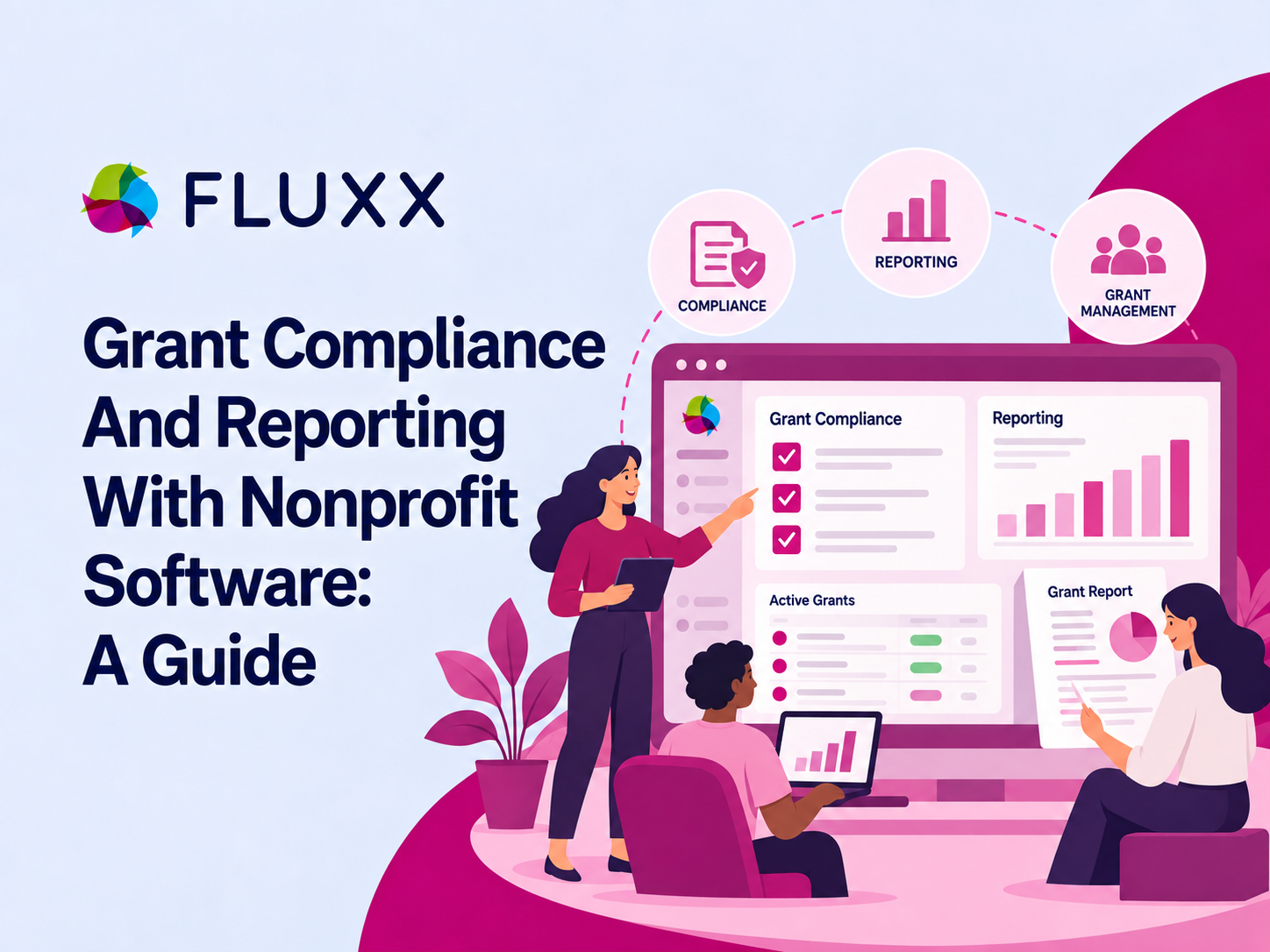
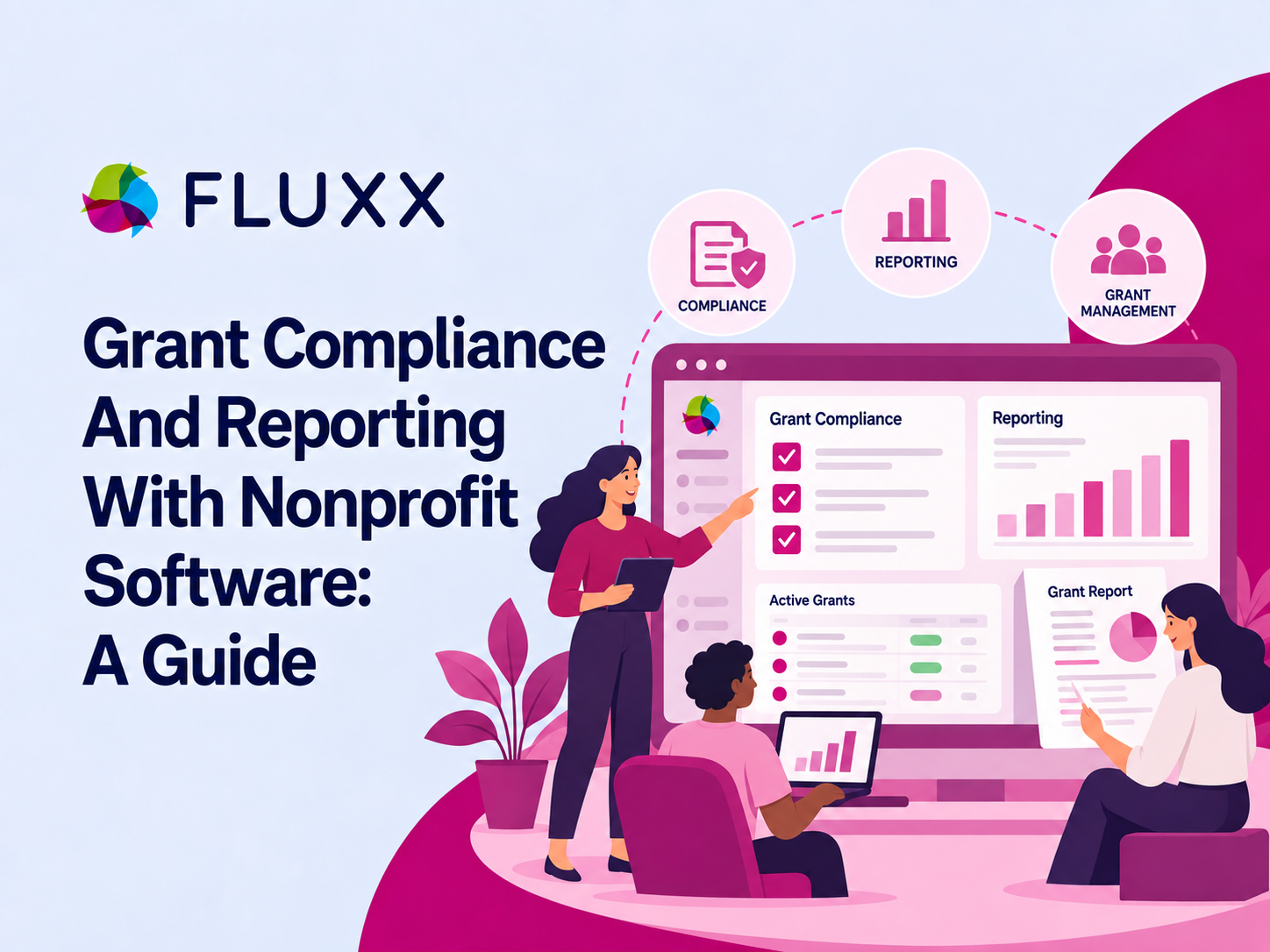
Fluxx provides nonprofits a connected platform which allows them to create a more organized approach to grant reporting and compliance, placing all important information about each award into one connected platform.
Instead of managing all requirements across spreadsheets, emails, folders and calendars you can use Fluxx to keep a better view of each award and its requirements.
Fluxx can help nonprofits:
- Centralize grant information: Keep award details, requirements, reports, documents, approvals and historic information.
- Track deadlines and obligations: Get visibility of upcoming reports, milestones, renewals and other requirements.
- Assign ownership: Clearly identify who is responsible for each compliance task and what is next.
- Facilitate reporting: Keep consistent information for funder reports and internal oversight.
- Support audit-readiness: Keep organized historical records and documentation.
- Reduce manual work: Stop doing repetitive spreadsheet updates, email follow-ups and document searches.
- Improve cross-department visibility: Ensure that development, finance, program and leadership teams have access to the same information about each award.
Grant management software won't necessarily solve your compliance obligations. It will help to organize and track them.
Creating A More Reliable Grant Compliance and Reporting Process
Grant compliance and reporting becomes harder for nonprofits as they grow because every new award comes with its own deadlines, requirements, documentation and stakeholders.
Organizations that navigate grant compliance effectively integrate these responsibilities directly into their ongoing grant management operations, rather than treating compliance as a reactive end-of-cycle task.
They assign ownership, track obligations, maintain consistent data, monitor spending and keep documentation available throughout the lifetime of each award.
Different systems may help with different aspects of this work, but grant management software can help with organizing the whole process.
For nonprofits managing extensive grant portfolios, this strategic approach saves critical time, enhances reporting precision, fortifies audit readiness, and unlocks future funding opportunities.
Schedule a consultation with Fluxx to discover how our grant management software can transform your organization's compliance and reporting processes.